BUILT IN THE PAST. DESIGNING THE FUTURE.
PROJECT—Education,On the Boards
Ethel I Baker Elementary School
Client: Sacramento City Unified School District
Size: 74,500 sq. ft.
Cost: Est. $90 Million
Completion: Est. June 2029
Delivery Method: Progressive Design-Build
Location: Sacramento, CA
Service: Community Outreach, Concept Design, Feasibility Studies, Master Planning, Programming, Site Analysis, Site Planning, Architectural Design, Interior Design, Space Planning, 3D Visualization/BIM Modeling, FF&E Coordination, Sustainability Certification (LEED®/CHPS)
Principal-in-Charge: Brian Maytum
Senior Project Architect: Chris Flatt
Project Architect: Elizabeth Hawks-McBride
Senior Project Coordinator: Sara Grunwald Moore
Design Technician: Jillian Villegas
General Contractor: Otto Construction
Construction Manager: Kitchell CM
PROJECT DESCRIPTION
The original Ethel Baker Elementary School campus, built in 1950, had reached the end of its useful life. The aging facilities no longer supported modern, high-quality learning environments for its diverse K–6 student population. Through Sacramento City Unified School District’s (SCUSD) $750 million Measure H bond program, SCUSD partnered with Nacht & Lewis and Otto Construction under a progressive design-build delivery method to fully replace the campus on its existing site.
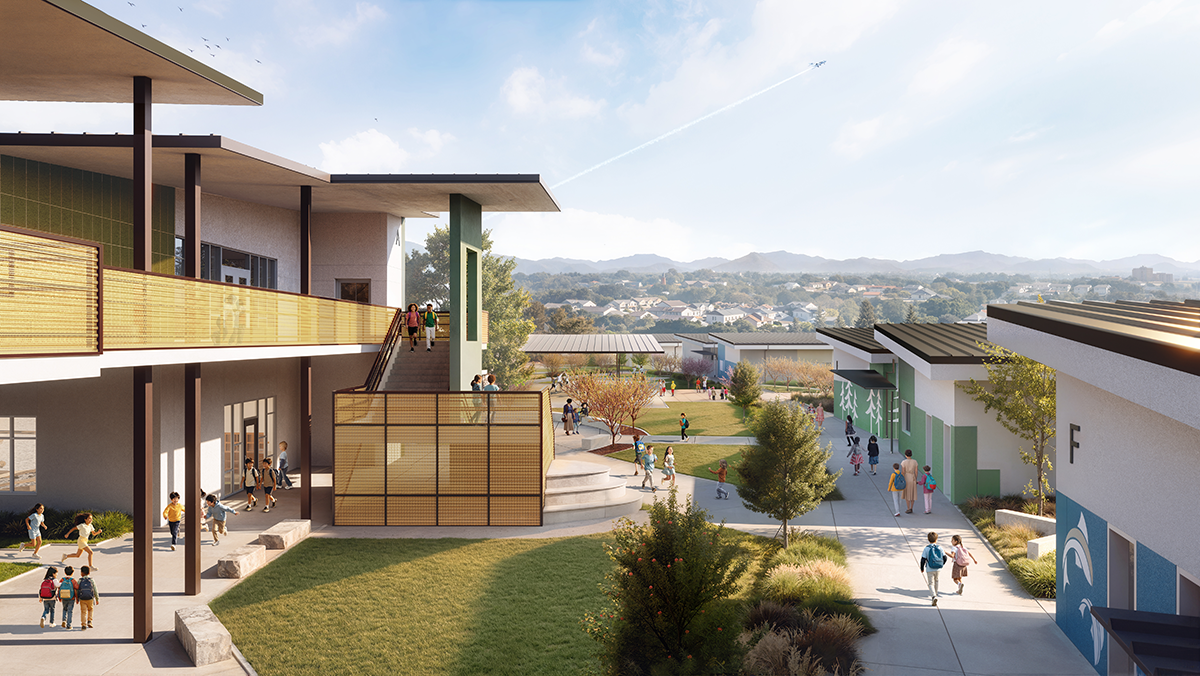
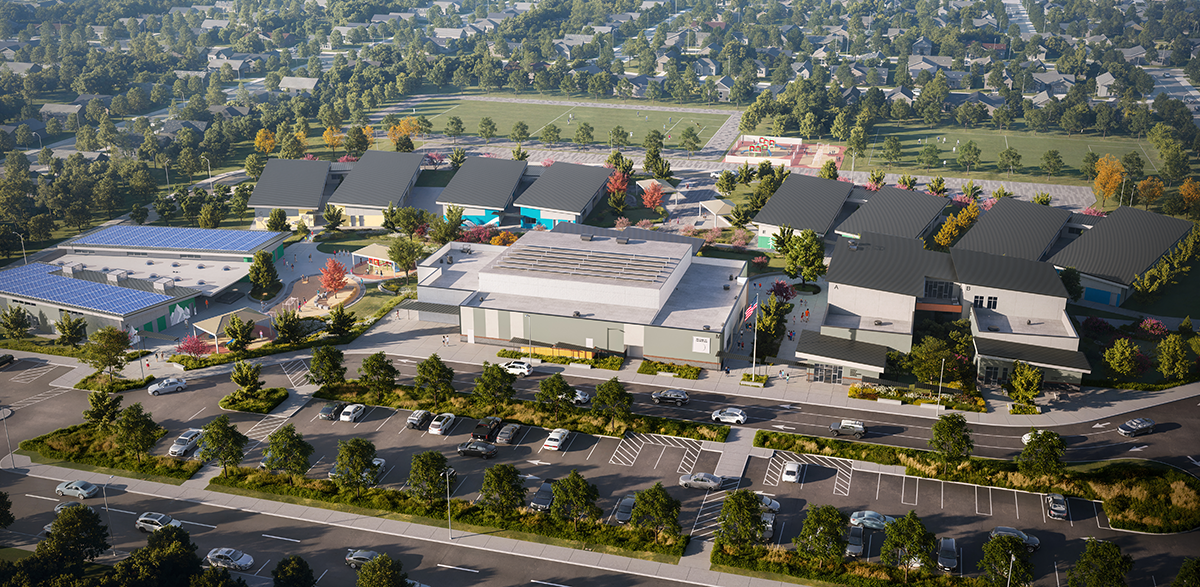
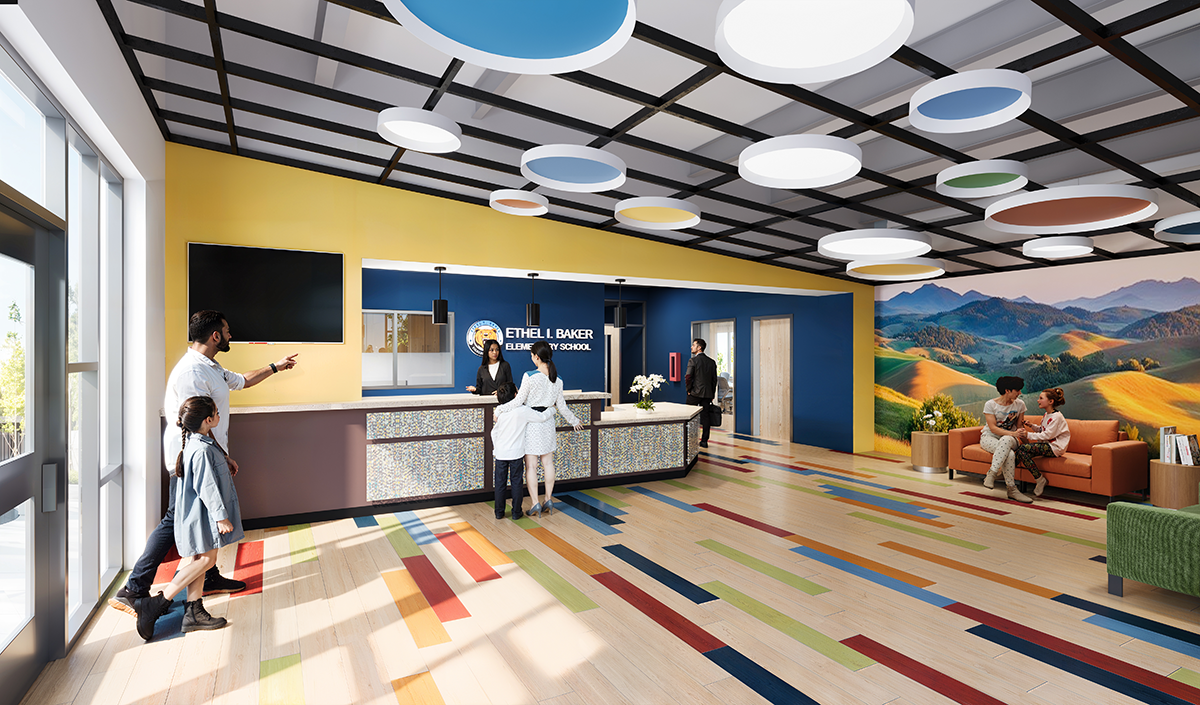
The new 76,000 sq. ft. campus delivers a modern, flexible learning environment designed for collaboration, wellness, and community connection. A two-story main building houses administration, student services, a library, and a wellness center. Preschool, kindergarten, and core classrooms, along with an exploration lab, are organized into small learning communities connected by a central collaboration spine. A separate multipurpose building supports food service, a gymnasium, a performance stage, and after-school programs.
Serving the Lemon Hill neighborhood in south Sacramento, the campus prioritizes equity and inclusion for students, staff, and the surrounding community. A key feature is the community wellness center, which includes dedicated space for families and caregivers to access resources and support services. Biophilic design principles are integrated throughout the campus, incorporating natural light, gardens, water features, and natural materials. These elements strengthen the connection between indoor and outdoor environments, supporting student health, well-being, and engagement.